May 16, 2026 • Dale Kosmicki • 10 min reading time • Prices verified May 24, 2026
Setting Up Your Bench Grinder for OSHA 1910.215 Compliance: Stands, Work Rests, Eye Shields, and Wire Wheels
A bench grinder is one of the most common power tools in any metal shop — it’s the motorized unit bolted to a stand or workbench that spins abrasive wheels (or wire wheels) at high speed to sharpen tools, remove rust, deburr parts, or clean weld seams. Because those wheels spin at 3,450 to 3,600 RPM or faster, a failure isn’t a nuisance — it’s a medical event. That’s why OSHA (the Occupational Safety and Health Administration) published Standard 1910.215, a federal regulation that spells out exactly how bench grinders must be guarded, mounted, and maintained in any American workplace. If you’re setting up a grinder for the first time, adding stations to a job shop, or just doing a compliance audit before an inspection, this guide walks you through every required element — stands, work rests, eye shields, and wire wheel rules — with the actual numbers from the standard, not a vague summary of it.
| EDITOR'S PICKJET 8-Inch Bench Grinder with W… | Mid-tierDEWALT DW758 8-Inch Bench Grind… | Budget pickDEWALT Wire Wheel For Bench Gri… | |
|---|---|---|---|
| Motor HP | 1 HP | — | — |
| RPM | 3450 | — | — |
| Voltage | 115V 1Ph | — | — |
| Wheel Type | Wire wheel | — | Crimped wire |
| Price | $469.99 | $136.76 | $17.99 |
| See on Amazon → | See on Amazon → | See on Amazon → |
Why 1910.215 Compliance Isn’t Optional (and What an Inspector Actually Checks)
Most shop foremen know vaguely that bench grinders need guards. Fewer know the exact clearance tolerances that trigger a citation, and fewer still know that wire wheels carry their own separate set of requirements that aren’t covered by the wheel-guarding rules alone.
OSHA 1910.215 covers “abrasive wheel machinery,” which includes pedestal grinders, bench grinders, and cylindrical grinders. An OSHA compliance officer walking into your shop will look at five things in roughly this order:
- Wheel guards — Is the exposed arc of the wheel within the legal limit?
- Work rests — Are they adjusted to within 1/8 inch of the wheel face?
- Tongue guards (spark deflectors) — Are they within 1/4 inch of the wheel periphery?
- Eye shields — Are they present, uncracked, and positioned correctly?
- Wheel condition and mounting — Is the wheel ring-tested, flanged correctly, and rated for the machine’s RPM?
Each item has a specific measurement attached to it. The standard isn’t “guards should be close” — it says how close. If you’re citing this to a crew member or writing a shop SOP, the actual citations matter. Let’s go through each one.
Stands and Machine Mounting: The Foundation of a Safe Setup
The stand itself isn’t glamorous, but it’s the first place compliance breaks down in smaller shops. Portable bench grinders sitting on a rubber mat on a wooden workbench are common — and they’re almost always non-compliant when the machine isn’t anchored.
Mounting requirement: 1910.215(a)(1) requires that floor-standing and bench-mounted grinders be firmly secured. “Firmly” means bolted down so the unit cannot walk, tip, or shift under normal operating load. A grinder that vibrates itself to the edge of a shelf is a grinder waiting to injure someone.
Practical guidance:
- Bench-mounted units should be through-bolted to a solid hardwood or steel-topped bench rated for the machine’s weight plus dynamic load.
- Pedestal (floor-standing) units should be anchor-bolted to a concrete floor using the manufacturer’s specified hardware. If the floor is epoxy-coated, use wedge anchors sized for the epoxy system’s bond strength, not just the concrete spec.
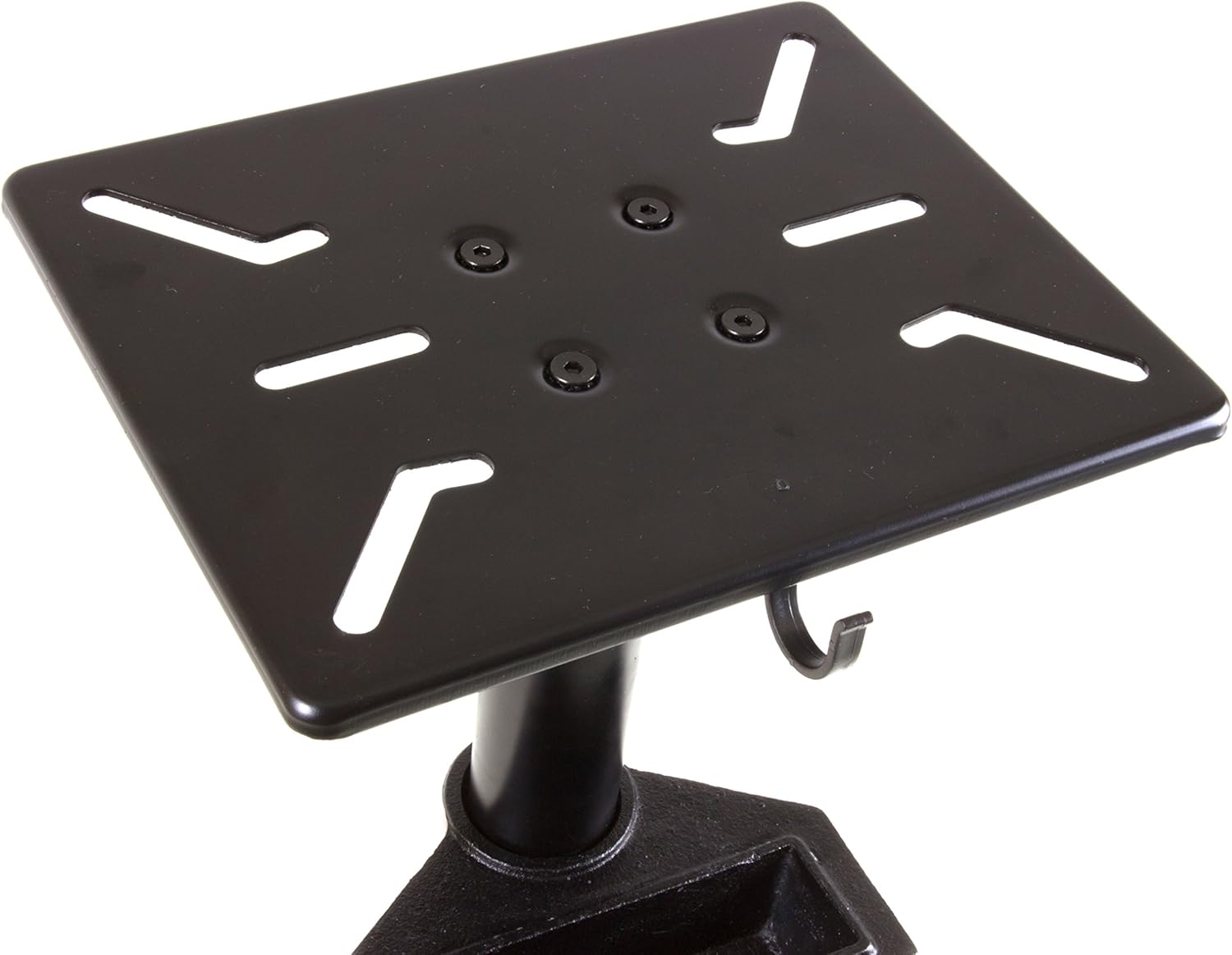
- Grinder stands sold for compliance work typically include a bolt pattern and a base footprint wide enough to prevent tip-over. For shops equipping multiple stations on a budget, a welded-steel adjustable-height stand covers the mounting requirement without custom fabrication.
DEWALT DW4906
$17.99
In stock on Amazon
Check price on AmazonFor single-station setups or tool rooms where space is tight, a compact pedestal stand gets the machine off the bench and onto a compliant anchor point without consuming a full equipment footprint.
DEWALT
$136.76
In stock on Amazon
Check price on AmazonWork Rests: The 1/8-Inch Rule Everyone Gets Wrong
Work rests are the adjustable platforms that support the workpiece while you’re grinding. They prevent the part from being pulled down between the wheel and the machine body — an event that can shatter a wheel instantly. OSHA 1910.215(b)(9) is unambiguous:
“Work rests shall be kept adjusted closely to the wheel with a maximum opening of one-eighth inch (1/8 in.; 3.2 mm) to prevent the work from being jammed between the wheel and the rest, which may cause wheel breakage.”
In real shop conditions, this is the citation that shows up most often. Here’s why: work rests are set correctly when the machine is new, and then nobody touches them as the wheel wears down. A wheel starts at, say, 8 inches in diameter. After a few months of grinding, it’s at 6.5 inches — and the work rest, still in its original position, now has a 3/4-inch gap. That’s a citation, and more importantly, it’s a legitimate safety failure.
What to do:
- Build wheel-wear checks into your consumable replacement log. Every time someone notes the wheel is low, check the work rest gap before swapping the wheel.
- Put a 1/8-inch feeler gauge near the machine as a visual reminder. The actual gap check should use a real feeler gauge or a machined go/no-go spacer.
- Replacement work rests with finer micro-adjust hardware make field compliance easier. Cast-iron OEM work rests on budget grinders often have coarse slot adjustment that makes dialing in exactly 1/8 inch fiddly.
DEWALT DW4906
$17.99
In stock on Amazon
Check price on AmazonBy the Numbers
| Measurement | OSHA 1910.215 Requirement |
|---|---|
| Work rest gap (max) | 1/8 in. (3.2 mm) |
| Tongue guard gap (max) | 1/4 in. (6.4 mm) |
| Exposed wheel arc (max, bench grinder) | 90° above the horizontal plane of the spindle |
| Minimum flange diameter | 1/3 of wheel diameter |
Eye Shields: Not a Substitute for PPE, But Still Required
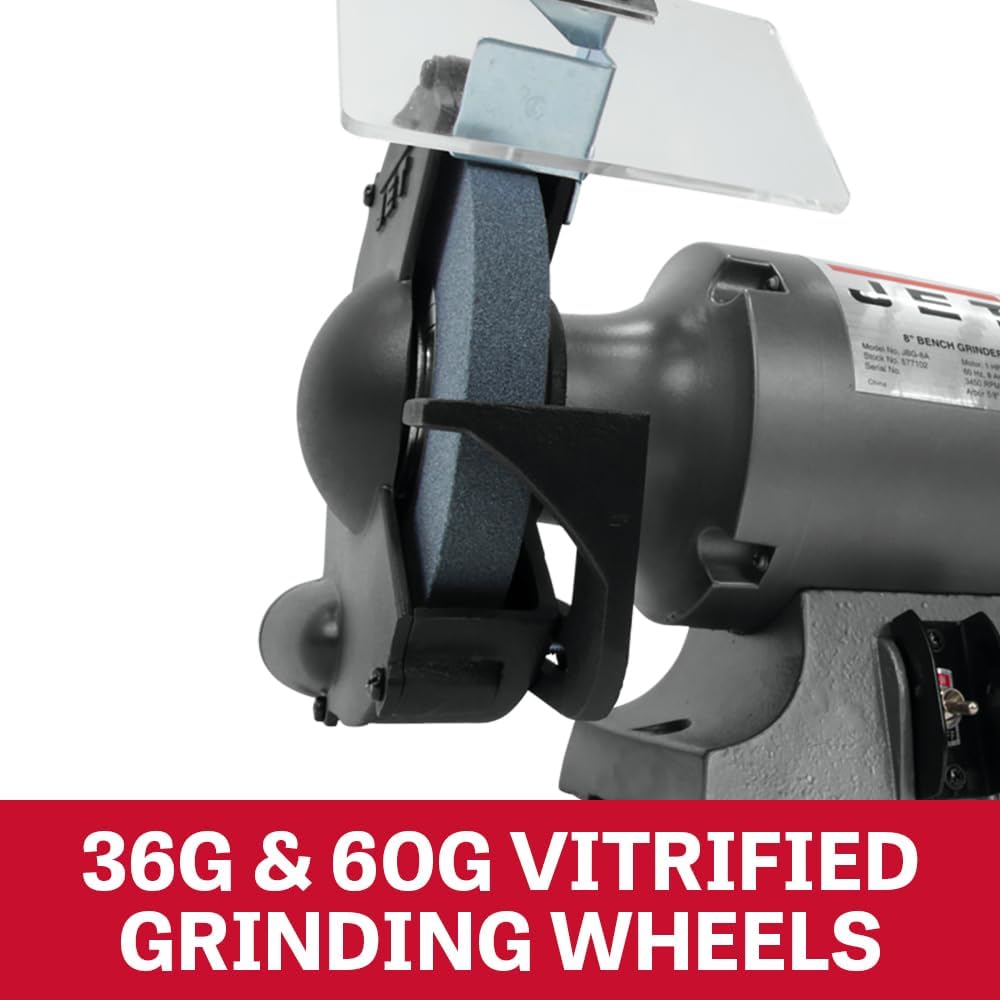
This is one of the most misunderstood points in bench grinder compliance. The eye shield mounted on the grinder (the hinged or fixed plastic or glass deflector on the wheel guard) is not a replacement for safety glasses or a face shield. OSHA 1910.215(b)(2) requires machine-mounted eye shields in addition to personal protective equipment — not instead of it.
The shield’s job is to catch sparks, scale, and coarse grit that travels in a predictable arc off the wheel. A face shield protects the operator from the less-predictable fragments. Both are required when both are required. If your shop’s PPE policy says “eye shields on the machine so workers don’t need glasses,” that’s a policy that will fail an inspection and eventually fail a worker.
What the standard actually says:
- Eye shields must be provided on the grinder per 1910.215(b)(2).
- PPE requirements for grinding operations are governed by 1910.133, which mandates appropriate eye and face protection for any operation that presents a flying-fragment hazard. Grinding qualifies.
- Cracked, yellowed, or delaminated eye shields should be replaced immediately. A compromised shield gives a false sense of protection and may not meet the optical clarity requirements for machine guards described in ANSI Z87.1 (American National Standards Institute, Occupational and Educational Personal Eye and Face Protection Devices).
Replacement eye shields for common bench grinder platforms are inexpensive and widely available. For a shop running several grinders, keeping two spares per machine on the shelf is cheap insurance.
DEWALT DW4906
$17.99
In stock on Amazon
Check price on AmazonWire Wheels: Separate Rules, Separate Hazards
Wire wheels deserve their own section because they’re regulated differently and the failure mode is nastier. An abrasive grinding wheel that fails typically shatters — fast, but in a somewhat predictable pattern. A wire wheel that loses a wire is more like a needle gun with no aiming constraints. Wire fragment embeds in skin, eyes, and exposed surfaces at striking velocity.
The key rules for wire wheel use under OSHA 1910.215 and ANSI B7.1 (American National Standards Institute, Safety Requirements for the Use, Care, and Protection of Abrasive Wheels):
-
Speed rating must match the machine. Wire wheels carry a maximum safe operating RPM stamped or tagged on the wheel. Never mount a wire wheel rated lower than the grinder’s no-load RPM. This sounds obvious; it’s violated constantly when shops mix wheel stock.
-
Guards are still required. Some operators remove the grinder wheel guard when installing a wire wheel because the wheel’s flange diameter is larger. This is not permitted. If the OEM guard doesn’t accommodate your wire wheel, you need either a different wheel or an OEM-approved guard extension — not an unguarded setup.
-
Face shields are non-negotiable. The OSHA Abrasive Wheel Grinder Safety fact sheet specifically calls out that wire wheel operations require a face shield worn over safety glasses, not just glasses alone.
-
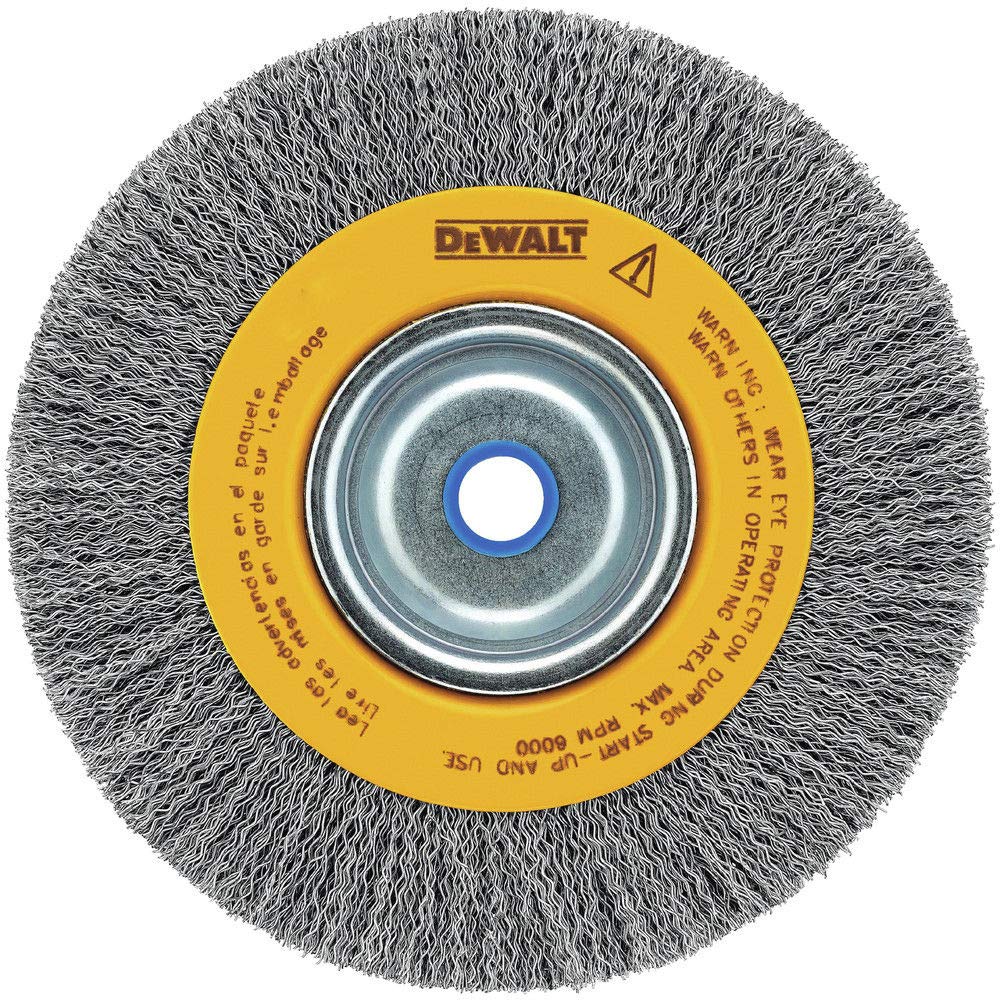
Twisted vs. crimped wire: Twisted-wire wheels (where wire strands are wound together into tufts) are more aggressive and shed wire more readily than crimped-wire wheels (individual corrugated wires). For production weld cleanup on a bench grinder, crimped-wire wheels typically offer better wire retention and longer service life — which also means fewer flying-wire events per hour worked. Wire wheel selection guidance is detailed in ANSI B7.1 (American National Standards Institute, Safety Requirements for the Use, Care, and Protection of Abrasive Wheels), which covers wheel construction classifications and safe operating practices for both abrasive and wire wheel types.
For shops doing regular weld seam cleanup or rust removal in a tool room environment, a quality wire wheel is a daily consumable decision. Don’t optimize purely on unit price; factor in wire-loss rate over the wheel’s service life.
JET
$399.00
In stock on Amazon
Check price on AmazonFor occasional use — one or two parts per week — a mid-range crimped wire wheel gives you the retention benefit without the premium.
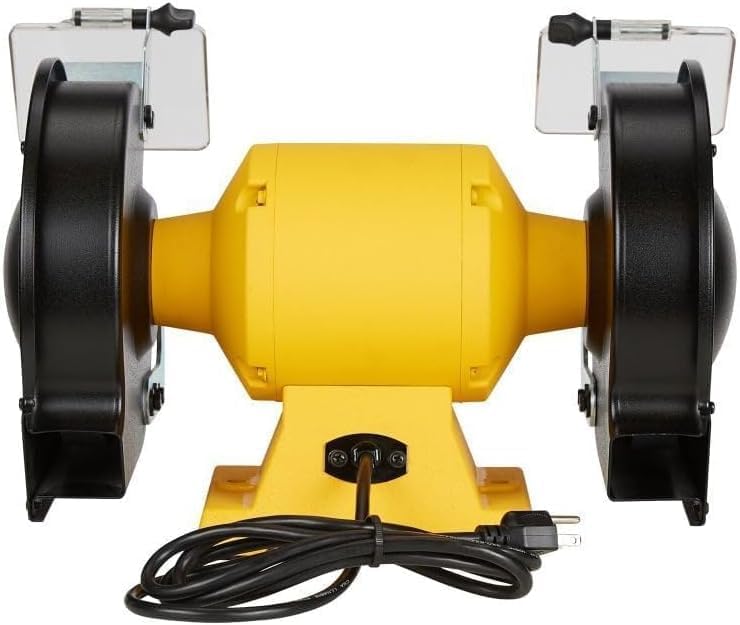
DEWALT
$136.76
In stock on Amazon
Check price on AmazonPutting It Together: A Pre-Use Compliance Checklist
If you’re setting up a station from scratch or doing a compliance walk before an inspection, here’s the sequence to run through. This isn’t a substitute for reading the actual standard, but it covers the items most likely to generate citations in a typical job shop:
Before the machine goes live:
- Machine is bolted to bench or pedestal; pedestal is anchor-bolted to floor
- Wheel is ring-tested (tap lightly with a non-metallic mallet — a clear ring indicates no cracks; a dull thud means reject the wheel)
- Wheel RPM rating meets or exceeds the machine’s spindle speed
- Flanges are the correct diameter (minimum 1/3 of wheel diameter) and blotters (paper washers) are installed between flanges and wheel faces
- Guard is in place and the exposed arc is within the 90° limit above the spindle centerline
- Tongue guard is set within 1/4 inch of wheel periphery
- Work rest is adjusted to within 1/8 inch of wheel face
- Eye shield is present, undamaged, and positioned correctly
- Operator PPE (safety glasses + face shield for wire wheel work) is available and required by posted shop policy
Ongoing maintenance:
- Check and readjust work rest gap every time the wheel is dressed or replaced
- Inspect eye shield for cracks or delamination weekly
- Document wheel ring tests in your equipment maintenance log
The compliance framework here — OSHA 1910.215 plus ANSI B7.1 (Safety Requirements for the Use, Care, and Protection of Abrasive Wheels, available through the American National Standards Institute) — doesn’t ask for anything exotic. It asks for hardware that’s adjusted correctly and checked regularly. The shops that get cited aren’t usually the ones that lack equipment; they’re the ones where the work rest drifted out of spec six months ago and nobody reset it.
The decision rule: If you’re equipping a new station, buy the stand, the work rest upgrade, and the replacement eye shield at the same time you buy the grinder. The accessory cost is a small fraction of the machine cost, and retrofitting compliance gear after an inspection is always more expensive — in time, in re-work, and occasionally in fines — than building it in at setup. If your current grinder is already installed but you haven’t done a compliance walk, the checklist above takes about 15 minutes per machine. Do it this week.
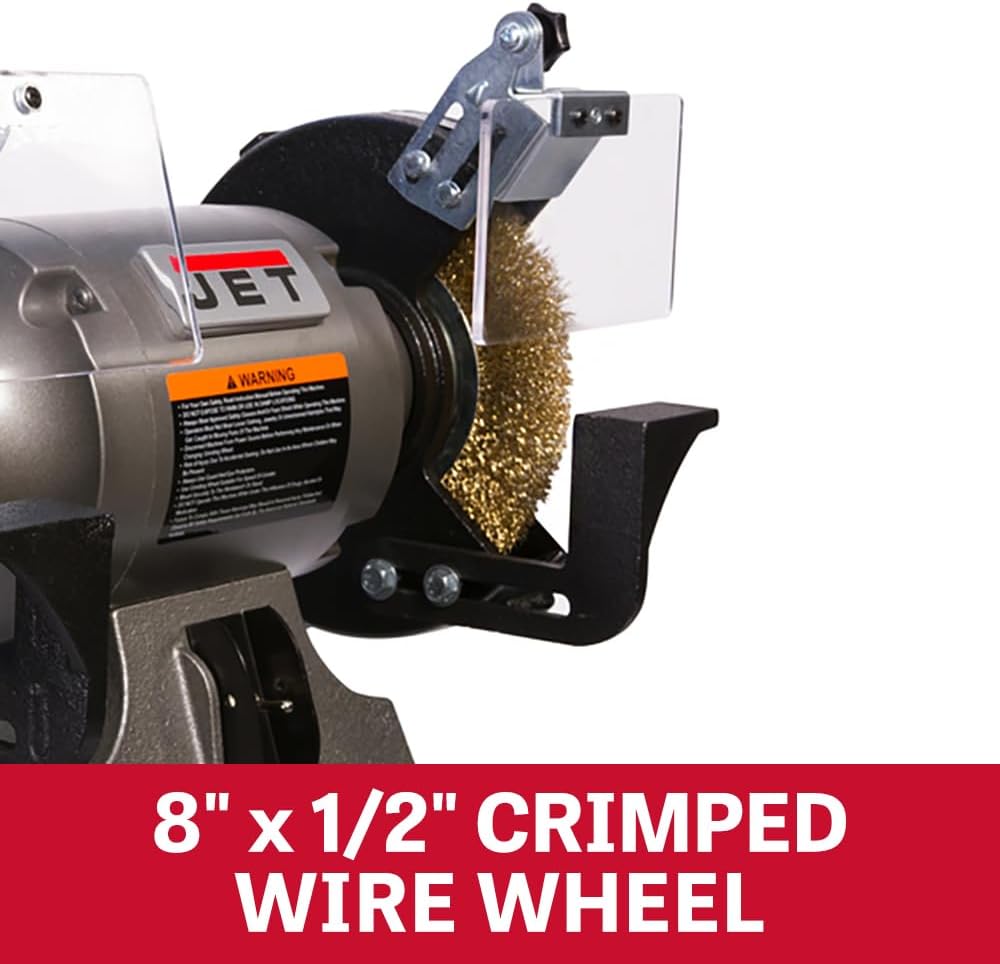
JET JBG-8W
$469.99
In stock on Amazon
Check price on Amazon